In the grand vision of smart manufacturing, precision actuation and sensing permeate nearly every critical process – semiconductor packaging demands sub-micron positioning, precision grinding relies on real-time vibration compensation, and life science instruments pursue picoliter-scale fluid manipulation. Achieving these requirements depends heavily on a core component that accurately converts electrical signals into micro-displacements: the multilayer stack piezoelectric ceramic. It defines the capability boundaries of high-end manufacturing in ways almost invisible to the naked eye.
I. From Material to Component: The Core Logic of Multilayer Stacks
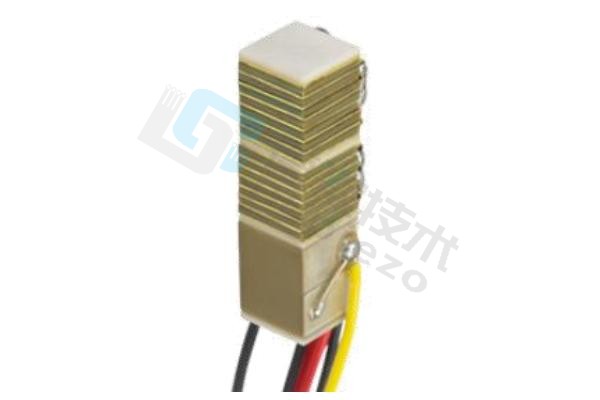
Piezoelectric ceramics themselves are not new, but for them to undertake high-frequency, high-load precision tasks in industrial settings, a single ceramic layer is far from sufficient. The essence of multilayer stack technology lies in co-firing dozens or even hundreds of piezoelectric ceramic films, alternately stacked with internal electrodes, into a monolithic component. Each layer can be controlled to a thickness of several tens of micrometers. When an electric field is applied, each layer undergoes a minute longitudinal expansion or contraction. The displacements sum up, enabling the entire component to output displacements from a few micrometers to over one hundred micrometers within millisecond response times, while simultaneously bearing forces of thousands of Newtons.
The sophistication of this structure lies in its "low-voltage operation." Unlike traditional discrete stacks, multilayer stacks have extremely small electrode spacing, typically on the order of 20–100 micrometers. Therefore, drive voltages of only several tens to a couple hundred volts achieve high electric field strengths and substantial displacement outputs. This not only simplifies drive circuit design but also greatly enhances system safety, offering distinct advantages in voltage-sensitive applications such as semiconductor equipment and medical devices.
From a performance perspective, the displacement resolution of multilayer stack piezoelectric ceramics is theoretically limited only by electrical noise, easily reaching nanometer or even sub-nanometer scales, aligning perfectly with the precision motion control demands of smart manufacturing. Furthermore, their operational bandwidth can reach thousands or even tens of thousands of Hertz, keeping pace with dynamic processes such as high-speed dispensing and active vibration cancellation. Their extremely fast response, low heat generation, and lack of electromagnetic interference are gradually replacing conventional electromagnetic actuators and motor-leadscrew combinations in fields such as precision positioning, optical alignment, and vibration suppression, establishing them as key actuation components in next-generation equipment.
II. Four Key Scenarios Empowering Smart Manufacturing
● In the semiconductor manufacturing sector, multilayer stack piezoelectric ceramics play a foundational role. Processes such as wafer inspection, wire bonding, lithography lens adjustment, and reticle stage fine-tuning demand extremely high positioning accuracy and stability. Piezoelectric actuators directly driving flexure-hinge guiding mechanisms eliminate friction, backlash, and stick-slip, achieving repeatable positioning accuracy within a few nanometers. In certain lithography systems, dozens of piezoelectric actuators work in concert to compensate for thermal drift and precisely adjust the distance between the objective lens and the wafer – without the rigidity, bandwidth, and resolution of these components, production yield would be unattainable.
● Precision fluid control is another domain profoundly transformed by multilayer stack technology. At the heart of piezoelectric jetting valves and piezoelectric dispensing valves lies a high-speed response stack actuator. In 3C electronics assembly, microfluidic chip manufacturing, and IVD reagent packaging, droplet diameters often need to be accurate to the micron level, with hundreds of operations per second. Multilayer stacks deliver explosive displacement and force output over very short strokes, instantly ejecting or cutting off fluid to avoid tailing and stringing. Their response speed determines how many accurate dispensing actions can be completed per minute on the production line, directly impacting throughput and quality consistency.
● In active vibration control for high-end machine tools and optical tables, multilayer stack piezoelectric ceramics are the key to "counteracting fast disturbances with even faster responses." Cutting chatter during machining or low-frequency vibrations introduced by the external environment can degrade the surface quality produced by ultra-precision lathes and grinders, and also interfere with measurement accuracy of laser interferometers and electron microscopes. Integrating stack actuators into vibration isolation platforms or machine tool spindles, collecting vibration signals via sensors, and using controllers to drive the actuators to output opposing displacements achieves real-time cancellation of vibration components within microseconds. This active damping solution provides vibration attenuation over a wide frequency band from a few Hertz to several kilohertz, far surpassing conventional passive rubber or air springs.
● In smart sensing and predictive maintenance, multilayer stack piezoelectric elements can also be used in reverse as high-sensitivity sensors. Leveraging the direct piezoelectric effect, the element generates an electrical charge when subjected to mechanical stress, offering high sensitivity and wide bandwidth. They can be embedded in bearing housings, tool holders, or equipment connecting flanges to continuously monitor micro-vibrations or impacts. Combined with edge computing and industrial IoT, these vibration signatures become digital fingerprints of equipment health, enabling early warning of incipient faults.
III. Engineering Challenges and the Deep Waters of Process Development
Transforming multilayer stacks from laboratory samples into reliable, consistent industrial-grade components involves a long and meticulous engineering journey. Material formulation first demands exceptional stability – the drift of piezoelectric constants, dielectric constants, and electromechanical coupling coefficients under electric field and temperature cycling must be minimized. Simultaneously, the internal electrode material must co-fire with the ceramic diaphragm without delamination or diffusion, as internal short circuits or micro-cracks would quickly lead to component failure.
Tape casting and lamination processes directly determine device uniformity. The thickness tolerance of each green ceramic tape must be controlled within microns. During lamination, small differences in alignment accuracy, interlayer pressure, and binder burnout processes can be amplified during subsequent sintering into deformation, cracking, or electrode misalignment. Many applications require actuators to operate in high-temperature environments, such as high-temperature micro‑nano printing or certain packaging equipment, which imposes stringent constraints on Curie temperature and thermal expansion matching.
Through years of volume production experience, Guangdong Deci Technology Co., Ltd. has gradually established a complete process闭环 from powder processing to co-firing profiles. By optimizing the shrinkage matching between internal electrode paste and the ceramic matrix, we have achieved an internal defect rate below 0.5% on high-layer-count products. At the same time, for different application scenarios, we have developed various sizes and packaging forms, including protected actuators with preload mechanisms and closed-loop versions with integrated strain sensors. These seemingly unremarkable engineering details are the real barriers that ensure customers' production lines run continuously for 365 days.
IV. The Continuously Evolving Precision Motion Nerves
The future of smart manufacturing will inevitably be highly adaptive and highly flexible. As AI endows machines with perception and decision-making capabilities, the actuation layer must match their precision and response speed. The bandwidth advantage of multilayer stack piezoelectric ceramics, combined with increasingly mature hysteresis compensation, charge drive, and self-sensing algorithms, enables near-linear displacement control, even omitting external precision sensors in some scenarios to reduce system complexity. Deci is collaborating with several research institutions to explore embedding cerebellar model-inspired algorithms into piezoelectric actuator drive schemes, enabling the component to autonomously learn and compensate for thermal drift and material aging.
From a broader industrial perspective, the localization of multilayer stack piezoelectric ceramics is no longer a simple substitution logic, but an indispensable technological fulcrum for the autonomous evolution of high-end equipment. Whether it is focus adjustment in next-generation EUV lithography, fast-feedback precision control in particle accelerators, or high-frequency micropumps for AI server microchannel liquid cooling, these miniaturized, high-force, fast-response actuation elements are essential. As more and more equipment is required to "see finer and move more precisely," the displacement energy accumulated in each stack of piezoelectric layers adds a powerful weight to the precision of "Intelligent Manufacturing in China."




24小时免费咨询
请输入您的联系电话,座机请加区号