As a core member of the smart material family, piezoelectric ceramics, with their unique electromechanical energy conversion capability, have become the key to modern precision actuation and sensing technologies. At Guangdong Deci Technology Co., Ltd., we deeply understand that the performance parameters of multilayer stack piezoelectric ceramics are not merely cold numbers, but rather the "genetic code" determining the success or failure of end products. This article delves into how six key performance indicators play decisive roles in practical applications.
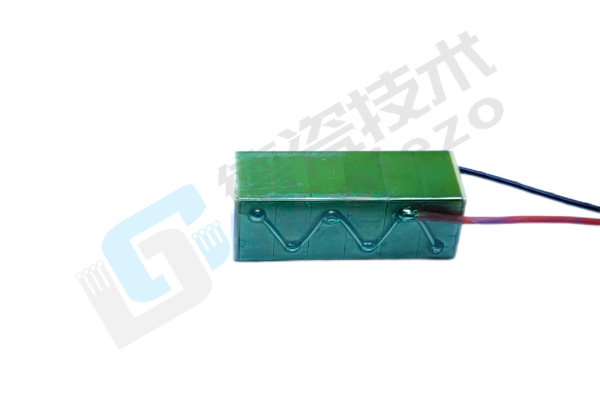
I. Piezoelectric Constant: The "Efficiency Engine" of Energy Conversion
The piezoelectric constant (d₃₃, d₃₁) directly determines the material's ability to convert electrical energy into mechanical energy (and vice versa).
●High-Sensitivity Sensors: In scenarios such as medical-grade blood pressure monitoring, a high d₃₃ value means higher charge output, increasing sensor sensitivity by over 30% and enabling precise capture of pressure fluctuations at the millimeter of mercury level.
●Medical Ultrasound Imaging: B-mode ultrasound probes using high d₃₃ materials significantly enhance ultrasonic wave transmission and reception efficiency. Data shows that for every 10 pC/N increase in d₃₃, image resolution improves by 15%, providing clearer images for clinical diagnosis.
●Micro-Audio Devices: For portable devices like TWS earphones, high d₃₃ piezoelectric ceramics can drive larger amplitudes at low voltages, achieving high-fidelity audio reproduction in a compact form factor.
II. Dielectric Constant: The "Balancing Beam" for Miniaturization and High-Frequency Operation
The dielectric constant (εᵣ) determines the material's capacitive characteristics and is a core variable in the design of thinner, smaller, and higher-frequency devices.
●Compact Power Supplies: In LCD backlight drivers for laptops, high εᵣ PZT-based ceramics can significantly reduce piezoelectric transformer volume, achieving a 20% reduction in device thickness compared to conventional solutions.
●5G RF Front Ends: 5G communication filters require low εᵣ (<20) to minimize signal loss. Materials like lithium niobate-based ceramics become the first choice, ensuring stable high-speed signal transmission.
●Industrial Environmental Sensing: Capacitive sensors for liquid level monitoring require materials with moderate εᵣ to achieve the best balance between sensitivity and environmental anti-interference capability.
III. Electromechanical Coupling Coefficient: The "Ruler" of Energy Utilization Efficiency
The electromechanical coupling coefficient (k) directly reflects the conversion efficiency between electrical and mechanical energy.
●Precision Actuation: In applications such as microscope autofocus, high k-value (>0.5) materials increase piezoelectric motor speed by 25% and torque by 18%, enabling more powerful and efficient precision motion.
●Signal Processing: SAW filters in mobile phones rely on moderate k-values (0.2~0.3) to balance passband width and selectivity, effectively filtering out spurious signals.
●Self-Powered Systems: Wearable devices using high k materials to harvest ambient vibration energy can significantly improve energy conversion efficiency and extend device battery life.
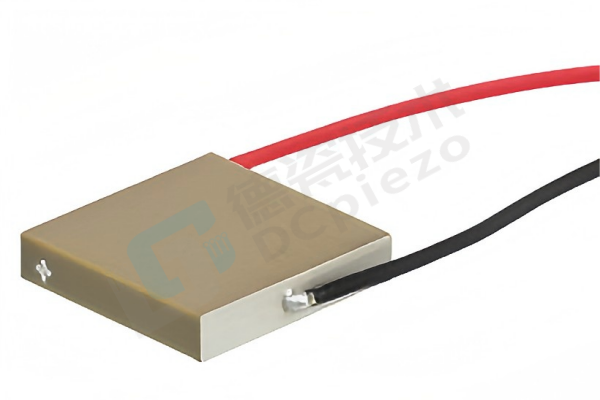
IV. Mechanical Quality Factor: The "Regulator" of Resonant Behavior
The mechanical quality factor (Qₘ) determines the material's energy loss and frequency characteristics under resonance.
●Clock Sources: Piezoelectric resonators in timing circuits require ultra-high Qₘ (>1000) to obtain an extremely sharp resonance peak, controlling frequency error within ±1 ppm.
●Efficient Cleaning: Ultrasonic cleaning equipment prefers low Qₘ (<100) materials. Their wide resonance bandwidth enables uniform ultrasonic wave propagation in liquids, effectively improving cleaning efficiency by approximately 30%.
●Condition Monitoring: Industrial vibration sensors use moderate Qₘ materials, balancing fast response with long-term stability to achieve timely early warning of equipment faults.
V. Curie Temperature: The "Safety Red Line" for Reliable Operation
The Curie temperature (Tᶜ) is the critical point at which piezoelectric ceramics lose their piezoelectricity, determining the material's applicable environmental range.
●High-Temperature Environments: Knock sensors in automotive engine compartments must use ceramics with Tᶜ > 200°C (e.g., PZT-4) to withstand sustained temperatures exceeding 150°C.
●Consumer Electronics: Products operating at room temperature, such as household electronic scales, have relatively lenient Curie temperature requirements (Tᶜ > 100°C is sufficient).
●Extreme Environments: Aerospace equipment must cope with low temperatures down to -50°C. Optimized material formulations ensure stable piezoelectric performance across a wide temperature range.
VI. Mechanical Strength: The "Foundation Stone" of Product Lifespan
Given the inherent brittleness of piezoelectric ceramics, mechanical strength is the key to determining product reliability.
●Industrial Durability: Industrial vibration sensors require flexural strength >150 MPa to withstand strong shocks during equipment operation.
●Flexibility Trends: To accommodate human movement, piezoelectric sensors in wearable devices are often modified with polymer composites to achieve necessary flexibility, significantly extending service life.
●Surface Protection: The surfaces of long-term-use ultrasound probes are typically coated with wear-resistant ceramic layers to enhance scratch resistance and ensure long-term performance stability.
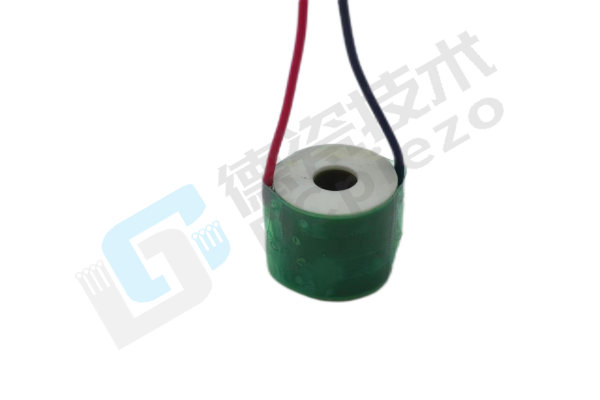
The performance parameters of piezoelectric ceramics do not exist in isolation; they often involve trade-offs (for example, high d₃₃ is frequently accompanied by high dielectric constant). Guangdong Deci Technology Co., Ltd. focuses on the R&D and manufacturing of multilayer stack piezoelectric ceramics, dedicated to achieving collaborative optimization of multiple performance parameters through material formulation and process innovation. Looking ahead, lead-free materials, nanocomposites, and flexibility will be important development directions. We are all committed to providing the core driving force for the next-generation product upgrades in medical, communication, industrial, and other fields. Choosing Deci means choosing a reliable partner that deeply understands the logic connecting performance to application.



24小时免费咨询
请输入您的联系电话,座机请加区号