The evolution of intelligent control systems is essentially a precision race centered on "sensing" and "actuation." As traditional electromagnetic actuators gradually reach their ceilings in response speed, positioning accuracy, and anti-interference capability, multilayer stack piezoelectric ceramics, with their unique electromechanical conversion characteristics, are becoming irreplaceable innovative elements in intelligent control system architectures. They serve as both the actuation core and the sensing node, and are the critical physical-layer support that enables the "sense–decide–act" closed loop.
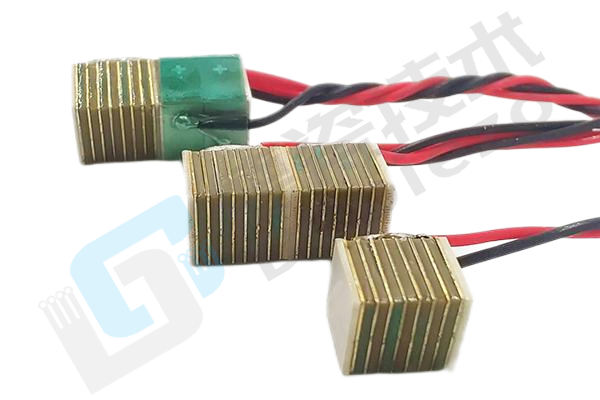
I. Redefining the Actuation Layer: From "Can Move" to "Moves Precisely"
The demands of intelligent control systems on the actuation layer have long surpassed simple on/off control, pursuing sub-micron or even nanometer-level precise response. Multilayer stack piezoelectric ceramics, leveraging the inverse piezoelectric effect, achieve efficient direct conversion from electrical to mechanical energy. Their core value is reflected in three dimensions:
●Nanosecond-Level Response, Enabling Zero-Delay Execution of Control Commands: Unlike the inductive delay of electromagnetic coils, the displacement output of piezoelectric ceramics is nearly synchronous with the drive voltage, with response times compressible to below the microsecond level. This means that in high-speed closed-loop control circuits, piezoelectric actuators can keep pace with the fastest output rhythm of control algorithms, achieving a qualitative leap in system dynamic performance.
●Nanometer-Level Resolution, Bringing Micro-Motion Control into the Atomic Scale: Through precise drive voltage regulation, multilayer stack structures can stabilize displacement precision at the nanometer level. This characteristic enables intelligent control systems to achieve positioning accuracy beyond the reach of traditional solutions in scenarios such as optical alignment, precision assembly, and micro/nano manipulation.
●Backlash-Free Direct Drive, Eliminating Control Errors at the Source: By eliminating transmission components such as gears and lead screws, the displacement of piezoelectric ceramics is output directly to the load end, completely avoiding nonlinear disturbances such as mechanical backlash and friction hysteresis, making the control model's predictions highly consistent with actual responses.
II. Endowing Systems with "Self-Sensing" Capability: The Actuator Is the Sensor
One of the core challenges of intelligent control systems is obtaining high-fidelity, low-latency state feedback. The unique feature of multilayer stack piezoelectric ceramics is that they inherently possess the physical property of "reciprocity between direct and inverse effects" – the same element can serve as an actuator outputting displacement, or as a sensor collecting force and deformation information. This characteristic opens new possibilities for control system design:
●Closed-Loop Control Without Additional Sensors: By decoupling the feedback component within the drive signal in real time, the system can achieve in-situ displacement self-sensing without adding any external displacement sensors, greatly simplifying system architecture and reducing the number of failure nodes.
●Force-Position Hybrid Control: Piezoelectric elements sense load reaction forces while outputting displacement, enabling the control system to achieve precise regulation of both position and force simultaneously – suitable for compliant control requirements such as "touch and stop" in precision assembly.
●State Self-Diagnosis: By monitoring changes in the piezoelectric element's own electrical response, device health status and temperature drift trends can be inferred, providing a data foundation for predictive maintenance.
III. Evolution of Drive Control Algorithms: Piezoelectric Characteristics Force Intelligent Upgrades
The inherent hysteresis and creep nonlinearity of piezoelectric ceramics were once the main obstacles limiting their control precision. However, it is precisely this challenge that has driven the deep application and rapid iteration of intelligent control algorithms in the piezoelectric drive field.
●Feedforward Compensation and Inverse Model Control: Based on mathematical modeling of piezoelectric hysteresis, the control system can perform pre-compensation before commands are issued, suppressing nonlinear errors to minimal levels and maintaining high linearity over large stroke ranges.
●AI Online Learning: Deep learning and reinforcement learning algorithms are being introduced into piezoelectric drive control. The system can adaptively adjust drive strategies based on real-time operating conditions, performing online compensation for disturbances such as temperature drift and load changes, pushing control precision from nanometer to sub-nanometer levels.
●Multi-Axis Coordinated Control: In multi-DOF piezoelectric platforms, coupling effects between axes are a control challenge. Intelligent decoupling algorithms can identify inter-axis interference in real time and dynamically compensate, achieving high-precision coordinated motion in planar or spatial dimensions.
IV. System Integration Innovation: From Discrete Components to Intelligent Modules
The value of multilayer stack piezoelectric ceramics lies not only in the material's inherent performance, but also in its high degree of integration capability with drive circuits, control chips, and feedback elements.
●Integrated Drive-Control Modules: Piezoelectric actuation units, power amplifier circuits, and closed-loop control chips are packaged into miniature modules, forming plug-and-play intelligent actuation nodes. This architecture greatly reduces system integration difficulty, enabling piezoelectric drive technology to be rapidly embedded into various intelligent equipment.
●Distributed Intelligent Control Networks: Multiple piezoelectric intelligent modules can be interconnected via a bus, forming a distributed actuation network. The host computer only needs to send high-level commands, while each node autonomously completes local closed-loop and coordination – suitable for multi-point vibration control and shape-adaptive adjustment of large flexible structures.
●Integration with MEMS Processes: Leveraging micro/nano processing technologies, piezoelectric ceramics can be integrated with other sensitive elements and logic circuits on a single chip, providing a "sense–compute–actuate" integrated physical-layer solution for micro intelligent systems.
V. Typical Application Scenarios: Practical Implementations of Intelligent Control Innovation
●Precision Optical Systems: Wavefront correction of adaptive optical mirrors relies on piezoelectric actuator arrays for nanometer-level surface figure adjustment. Intelligent control algorithms parse wavefront sensor data in real time and drive each unit to act in coordination, enabling telescopes and laser systems to maintain diffraction-limited imaging under dynamic disturbances.
●Semiconductor Manufacturing Equipment: Nanometer-level alignment of lithography wafer stages and dynamic flatness adjustment of wafer chucks both use piezoelectric ceramics as core actuation elements. The addition of intelligent control systems enables equipment to maintain sub-nanometer stability under high-speed motion and extreme cleanroom environments.
●Active Vibration Control: In scenarios such as precision instrument platforms, helicopter rotors, and large space structures, piezoelectric sensing and actuating elements form intelligent vibration control systems, perceiving vibration modes in real time and outputting anti-phase suppression signals, attenuating structural vibrations by over 90%.
●Minimally Invasive Surgical Robots: Piezoelectric actuators provide micron-level fine manipulation capability for surgical instrument tips. Intelligent control systems integrate force feedback and visual navigation, enabling surgeons to perform highly difficult precise movements through millimeter-scale incisions.
Multilayer stack piezoelectric ceramics are evolving from single "actuation elements" into core nodes in intelligent control systems that combine actuation, sensing, and adaptive capabilities. Their value lies not only in the performance limits of the material itself, but also in the synergistic effects unleashed through deep integration with control algorithms, integration processes, and system architectures. Guangdong Deci Technology Co., Ltd. is deeply engaged in the R&D and manufacturing of multilayer stack piezoelectric ceramics, committed to providing high-performance, highly integrated, and highly reliable piezoelectric core components for the intelligent control field, working with partners to drive the leap of intelligent systems from "automation" to "intelligence."




24小时免费咨询
请输入您的联系电话,座机请加区号